Multimodal AI and Grounding Challenges
Introduction
You can show a modern AI model a photo of your breakfast and it will describe it in perfect English. You can upload a screenshot and ask it to explain the error message. You can send it a chart and ask for a summary of the trend. This is multimodal AI, systems that can process both images and text, and in some cases audio and video as well.
On the surface, it feels remarkable. But once you start using multimodal AI seriously, in applications where accuracy matters, one problem becomes impossible to ignore: these systems can sound completely confident while being completely wrong about what they see. They describe objects that are not there. They misread spatial relationships. They apply statistical assumptions from training data to images where those assumptions do not hold.
This failure mode has a name: grounding failure. Understanding why it happens, how to detect it, and how to engineer around it is essential for anyone building real applications with multimodal AI, not just demos. This article breaks down the core challenges, explains the terminology, and offers concrete engineering techniques that reduce risk in production systems.
Problem Statement
The problem is not that vision-language models are bad at describing images. For the most common, well-lit, unambiguous images, they perform impressively. The problem is that they fail in ways that are hard to predict, hard to detect, and potentially dangerous, because their outputs feel authoritative.
A text hallucination, where the model invents a historical fact or a code function, tends to trigger skepticism in users who know AI can confabulate. But when a model describes an image, users tend to trust it more. The output feels like an observation, not a prediction. This trust gap is what makes grounding failures high-risk in any application where the image content matters for real decisions.
Medical imaging, quality control inspection, document parsing, security analysis, and nutritional assessment are all domains where a wrong description is not just an inconvenience, it is an active risk. The core question this article addresses is: what causes grounding failures, and what can engineers actually do about them?
Core Concepts and Terminology
Before examining specific grounding challenges, it is useful to have a shared vocabulary. The following terms appear throughout the literature on multimodal AI and are essential for understanding both the problem and the available engineering responses.
| Term | What It Means |
|---|---|
| Grounding | The degree to which model outputs are anchored in actual visual evidence rather than inferred from training data patterns. |
| Visual Hallucination | When a model claims to see something that is not present in the image, the most common and consequential grounding failure mode. |
| Spatial Reasoning | The ability to correctly identify the relative positions of objects, left, right, above, below, distance, in an image. |
| Dataset Prior | A statistical association from training data that the model applies by default, for example, assuming a person in a lab coat is a doctor. |
| OCR (Optical Character Recognition) | A specialised system for extracting text from images, far more reliable than asking a vision-language model to read text directly. |
| Perception-Reasoning Split | An architecture where a dedicated detection model handles visual perception and the LLM handles reasoning over the extracted facts, reducing hallucination risk. |
| Vision-Language Model (VLM) | A model trained on both images and text that can answer questions about images, generate captions, and perform visual reasoning tasks. |
| Multimodal RAG | An extension of retrieval-augmented generation that stores image embeddings and captions in a vector database, using retrieved similar images as grounding references. |
How Vision-Language Models Work
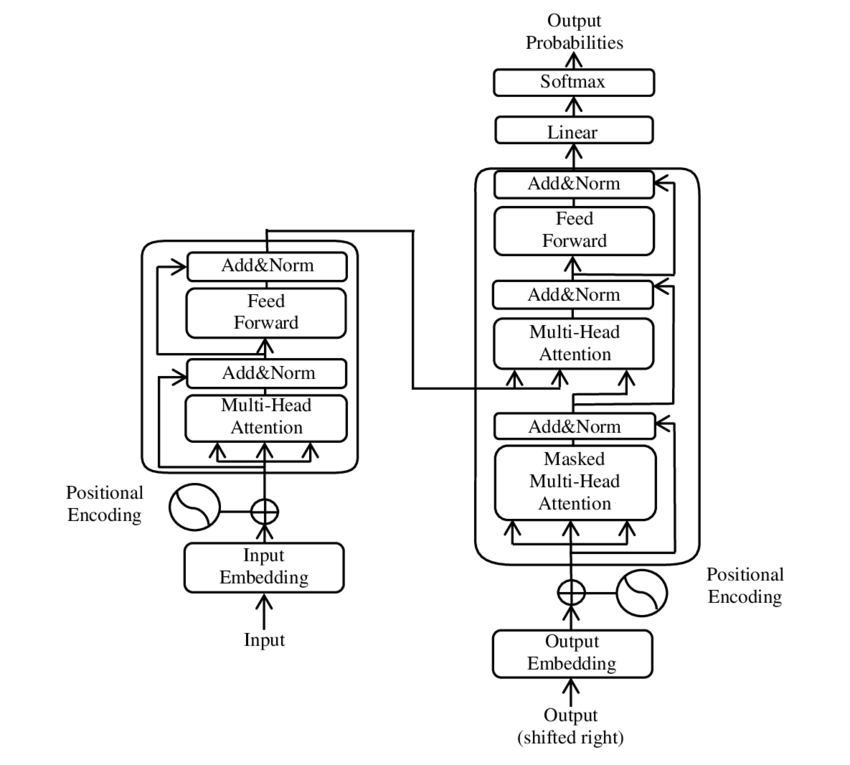
To understand grounding failures, it helps to understand how multimodal models actually process images. Most people assume these models "see" the way humans do, perceiving objects, edges, and spatial relationships directly. The reality is quite different.
A human sees an image as structured reality: objects with clear edges, spatial positions, and relationships that feel immediate and direct. A vision-language model does not work this way. The process can be understood in four conceptual steps.
- Image encoding. The image is divided into small patches and converted into a sequence of embedding vectors, lists of numbers that represent visual patterns in each region. There are no explicit object boundaries or spatial coordinates in this representation.
- Feature extraction. A vision encoder processes these patch embeddings and produces higher-level representations that capture textures, shapes, and contextual patterns from the image. This encoder was trained on large datasets and has learned what patterns tend to co-occur.
- Cross-modal fusion. The image features are combined with text embeddings from the input prompt through attention mechanisms. This is where the model begins to connect visual patterns with language concepts.
- Text generation. The language decoder generates a response token by token, using both the image features and the text context. At this step, the model is predicting what words come next, and it draws on both visual evidence and language patterns learned from training.
The critical insight is in that final step. Because the model is predicting text based on statistical patterns, it can generate plausible-sounding descriptions even when the visual evidence is weak or ambiguous. If thousands of kitchen images in training data included microwaves next to refrigerators, the model may describe a microwave even when none is visible, because the surrounding patterns make one statistically likely. The model is predicting, not observing.
Practical Example: Invoice Parsing Gone Wrong
Document parsing is one of the most popular multimodal applications, and one of the clearest illustrations of why grounding failures matter in practice. Consider a company that wants to automatically extract line items, totals, dates, and vendor names from invoices submitted as scanned PDFs or phone photos.
A straightforward approach, send the invoice image to a VLM and ask it to extract the structured data, produces inconsistent results that are difficult to trust. The model correctly extracts data from clean, well-scanned invoices. But on invoices photographed at an angle, printed on low-quality paper, or using unusual table layouts, it hallucinates numbers and misreads totals. When the model confidently reads a total of $14,500 as $1,450, the downstream accounting system has no way to detect the error. The output is structurally correct, it looks like a valid extraction, but numerically wrong.
The robust architecture separates the problem into three stages. First, a dedicated OCR engine extracts all text and spatial positions from the invoice image. Second, a layout-aware parsing system identifies which text belongs to which invoice field based on spatial position and document structure rules. Third, the LLM receives the already-extracted structured data and handles validation, formatting, and edge case reasoning, not character recognition. The LLM is never the primary source of truth for numerical data read from an image. That responsibility belongs to OCR.
This pattern, using specialised tools for perception and the LLM for reasoning, is the foundation of reliable multimodal system design. The invoice example demonstrates it concretely, but the same principle applies to quality inspection, medical report parsing, and security analysis.
Advantages of Multimodal AI
- Removes the need for manual description. Users can interact with physical images directly rather than writing text descriptions of what they see, dramatically reducing friction in image-heavy workflows.
- Handles common cases well at scale. For well-lit, unambiguous images of common subjects, modern VLMs perform impressively and reliably, making them practical for many real-world applications without extensive customisation.
- Enables entirely new application categories. Visual search, image-based question answering, and document understanding are only possible with multimodal capability, text-only systems simply cannot address these use cases.
- Improves rapidly across generations. Grounding research is active, and each new generation of models shows measurable improvement on standard visual reasoning benchmarks. The trajectory of improvement is steep.
- Reduces annotation cost for structured tasks. VLMs can be used to generate captions, extract metadata, and label images at a scale that human annotators cannot match, accelerating dataset creation for downstream supervised models.
Limitations and Trade-offs
- Grounding remains unsolved at the architectural level. Even the best current models hallucinate in ways that are hard to predict without systematic testing on the specific image distribution the application will encounter.
- Spatial reasoning is inconsistently reliable. Tasks involving left-right, above-below, object count, and distance remain problematic across all major VLMs regardless of scale.
- Robustness degrades with image quality. Blur, low resolution, unusual angles, and poor lighting all increase hallucination rates significantly, exactly the conditions real-world images often present.
- Domain specificity requires domain-specific training. General VLMs perform poorly on medical images, industrial defects, legal documents, and other specialised domains underrepresented in their general training data.
- The perception-reasoning split adds pipeline complexity. The most reliable architectures require maintaining and integrating separate specialised models, which is more complex to build and operate than a single VLM call.
- Confidence is not calibrated to correctness. Models sound equally confident when they are right and when they are hallucinating, which makes it difficult for downstream systems to detect errors automatically.
Common Mistakes
- Asking the VLM to read text from images instead of using OCR. This is one of the most reliable improvements available, yet many teams skip it because a single VLM call feels simpler. The accuracy gap is significant, especially for small fonts, low-resolution images, or unusual typography.
- Testing only on clean, well-lit images. Performance on ideal sample images is misleading. Grounding failures increase sharply with image quality degradation, the conditions that real users actually produce.
- Treating VLM outputs as observations rather than predictions. Failing to build verification or refusal logic into the pipeline means errors propagate silently into downstream systems that have no way to detect them.
- Attempting to fix grounding failures by switching to a larger model. Some failures are architectural, rooted in physical image ambiguity, dataset bias, or missing structured perception, and scale alone does not resolve them.
- Deploying multimodal AI in high-stakes domains without human validation. Relying on model confidence as a proxy for correctness is dangerous. The model sounds confident regardless of whether it is right.
- Skipping systematic hallucination benchmarking. Qualitative impression of quality during development does not reliably predict production hallucination rates. Building a benchmark with known ground truth images is essential before deployment.
Best Practices
- Always use OCR for text extraction. In any application where text accuracy matters, treat OCR as mandatory infrastructure. Extract text with a dedicated engine and provide it as structured context to the vision model.
- Separate perception from reasoning in production pipelines. Let specialised detection models handle structured visual extraction. Let the LLM handle reasoning over those extracted facts. This prevents the LLM from hallucinating perceptual evidence.
- Instruct models explicitly to express uncertainty. Prompt the model to refuse rather than hallucinate when visual evidence is insufficient. A less confident but honest answer is more useful than a confident but wrong one.
- Test on the actual image quality your users will produce. Dark restaurant photos, angled phone shots, compressed screenshots, not on ideal sample images from a dataset.
- Add a verification model or human review step for high-stakes decisions. Do not trust primary model confidence as a gate for consequential outputs.
- Use multimodal RAG for applications involving known objects or entities. Grounding model outputs in verified reference images reduces fabrication from training data patterns.
- Evaluate grounding quality quantitatively. Build a benchmark of challenging images with known ground truth and measure hallucination rate systematically, not just through qualitative review during development.
Comparison: Approaches to Reducing Grounding Failures
| Approach | What It Addresses | Best Used When | Trade-off |
|---|---|---|---|
| OCR for text extraction | Eliminates character hallucination from image text | Any system that must read text from documents, screenshots, or receipts | Requires integrating an additional OCR system into the pipeline |
| Region-based grounding | Reduces distraction from irrelevant parts of complex images | Industrial inspection, medical imaging, any application with a specific region of interest | Requires an initial detection step to identify and crop regions |
| Evidence-based prompt instructions | Shifts model toward more conservative, grounded responses | Lower-stakes applications where occasional errors are acceptable | Reduces hallucination but does not eliminate it; may increase refusal rate |
| Perception-reasoning split | Prevents the LLM from hallucinating perceptual facts entirely | Safety-critical or high-accuracy requirements in any domain | More complex pipeline; requires maintaining specialised detection models |
| Multimodal RAG | Grounds model outputs in verified reference images and metadata | Product identification, entity recognition, known-domain classification | Requires building and maintaining an image reference database |
| Verification model | Catches contradictions between the model's output and the image | Highest-stakes domains where false outputs carry serious consequences | Adds latency and cost; a second model can also have grounding failures |
FAQ
Will larger models solve the grounding problem?
Larger models show measurable improvements on visual reasoning benchmarks, and each new generation performs better than the last on standard tests. But grounding failures persist even in the largest current models for ambiguous images, unusual domains, and spatial reasoning tasks. Some grounding failures are architectural, rooted in how vision encoders represent images as statistical patterns rather than structured objects, and will require new approaches beyond simply scaling existing architectures. Scale helps, but it does not eliminate the problem.
How do I know if a grounding failure has occurred?
For applications with known ground truth, such as document parsing with correct values verifiable from the source, you can measure grounding error rate systematically by comparing extractions to verified data. For open-ended image description, detection requires either human review or a verification model that independently assesses whether the description is consistent with the image. Confident-sounding outputs are not a reliable indicator of correctness, the model sounds confident regardless of whether it is right or wrong.
Is the perception-reasoning split always necessary?
Not always. For applications where occasional errors are tolerable and the image content is within the VLM's training distribution, common objects, well-lit scenes, standard document formats, a single VLM with strong prompting and refusal instructions may be sufficient. For applications in specialised domains, with high accuracy requirements, or where errors carry real consequences, the perception-reasoning split is the more reliable architecture and the standard approach in safety-critical systems.
Can fine-tuning on domain data fix grounding failures?
Fine-tuning on domain-specific images significantly improves performance for the categories covered by that training data. A model fine-tuned on medical images will perform better on medical images than a general VLM. But fine-tuning does not eliminate the fundamental pattern-matching nature of the model, it shifts which patterns the model has learned. For safety-critical applications, fine-tuning should be combined with architectural safeguards rather than treated as a replacement for them.
What is the safest way to deploy multimodal AI today?
For high-stakes domains: use the perception-reasoning split, implement explicit refusal rules, add OCR for any text extraction, and keep a human in the loop for consequential decisions. For lower-stakes applications: strong prompt engineering with evidence-based instructions, systematic testing on realistic image conditions, and monitoring for hallucination patterns in production outputs. In both cases, treat model outputs as predictions to be verified, not observations to be trusted unconditionally.
References
- Radford, A., et al. (2021). Learning Transferable Visual Models From Natural Language Supervision. ICML 2021.
- Liu, H., et al. (2023). Visual Instruction Tuning (LLaVA). NeurIPS 2023.
- OpenAI (2023). GPT-4V System Card. openai.com.
- Ji, Z., et al. (2023). Survey of Hallucination in Natural Language Generation. ACM Computing Surveys, 55(12), 1–38.
- Zeng, Y., et al. (2024). Grounding Everything: Emerging Localization Properties of Vision-Language Transformers. CVPR 2024.
Key Takeaways
- Multimodal hallucinations are more dangerous than text hallucinations because outputs feel like direct observations rather than model predictions, users trust them more instinctively, and errors propagate silently.
- Grounding failure is rooted in how models process images: they predict statistically likely descriptions based on training patterns, not by observing objects directly. This is an architectural constraint, not a prompting problem.
- Spatial reasoning, object counting, and multi-step visual logic remain significant weak points in all current vision-language models. These cannot be reliably fixed with prompt engineering alone.
- Always use OCR for text extraction from images. Do not rely on the vision model to read characters from screenshots, documents, or receipts, a dedicated OCR engine is far more reliable.
- Separating perception from reasoning, using a dedicated detection model before the LLM, is the most reliable engineering pattern for reducing grounding failures in production systems.
- Test on the actual image quality your users produce, not on ideal sample images. Grounding failures increase significantly with image quality degradation, and this is where real-world systems break.